What Was a Polis? Exploring Ancient Greek City-States & Identity
The term "polis" is more than just the ancient Greek word for "city." It was the beating heart of ancient Greek civilization, a complex socio-political entity that encompassed not only a physical urban core and its surrounding territory but also served as the foundational unit of organization, governance, and, critically, identity for its inhabitants. To understand ancient Greece, one must grasp the profound significance of the polis – a concept far richer than our modern understanding of a city or even a nation-state.
The Polis Defined: A Unified Realm of Life and Loyalty
In ancient Greece, the polis (plural: poleis) represented a self-governing community where citizens shared a common culture, laws, and way of life. Unlike modern countries where cities exist within larger national borders, the polis was the native land. There was no overarching "country" as we understand it; instead, a vast territory was occupied by various Hellenic peoples, united by language and shared cultural elements, yet fiercely loyal to their individual poleis.
This distinct relationship meant that citizenship within a polis demanded supreme loyalty and active participation. Each polis boasted its own unique constitution, laws, and customs, fostering a deep sense of belonging and civic duty among its citizens. The surrounding countryside, referred to as chora, was integral to the polis, providing agricultural sustenance and resources, but it was the urban center that embodied the political, religious, and social hub. From the rugged Peloponnesus to the Aegean islands and beyond, collaborative studies have identified nearly 1,500 such settlements, highlighting their widespread importance across the Greek-speaking world of the Archaic and Classical periods.
Pillars of Identity: How the Polis Shaped its Citizens
The polis was the crucible in which ancient Greek identity was forged. Citizens were not merely residents; they were active participants in their community's destiny, deeply intertwined with its fortunes and reputation. This intense connection fostered unique societal values and civic responsibilities that differed significantly from one polis to another. Your identity as an Athenian was fundamentally different from your identity as a Spartan, defining everything from your education and social structure to your political rights and duties.
For citizens, involvement in public life was not just encouraged but expected. Whether through direct democracy in Athens or through military service in Sparta, contributing to the well-being and defense of the polis was a paramount virtue. This collective spirit led to remarkable achievements in philosophy, art, governance, and warfare, as each polis strove to demonstrate its superiority and unique character. The pursuit of arete, or excellence, was often framed within the context of serving and enhancing one's polis, cementing the idea that individual flourishing was inseparable from communal prosperity.
Renowned Ancient Greek City-States: A Glimpse into Diversity
While sharing a common Hellenic heritage, the ancient Greek city-states developed incredibly diverse political systems, cultures, and priorities. Examining some of the most famous among them reveals the spectrum of life and thought in the ancient Greek world.
Athens: The Cradle of Democracy and Philosophy
Situated in the fertile region of Attica, Athens stands as arguably the most celebrated Ancient Greek City. Its legacy is indelibly marked by revolutionary contributions to art, philosophy, and particularly, democracy. This progressive system, refined under visionary leaders like Cleisthenes and Pericles, allowed eligible male citizens to directly participate in governance through assemblies, a groundbreaking concept that continues to inspire democratic ideals worldwide.
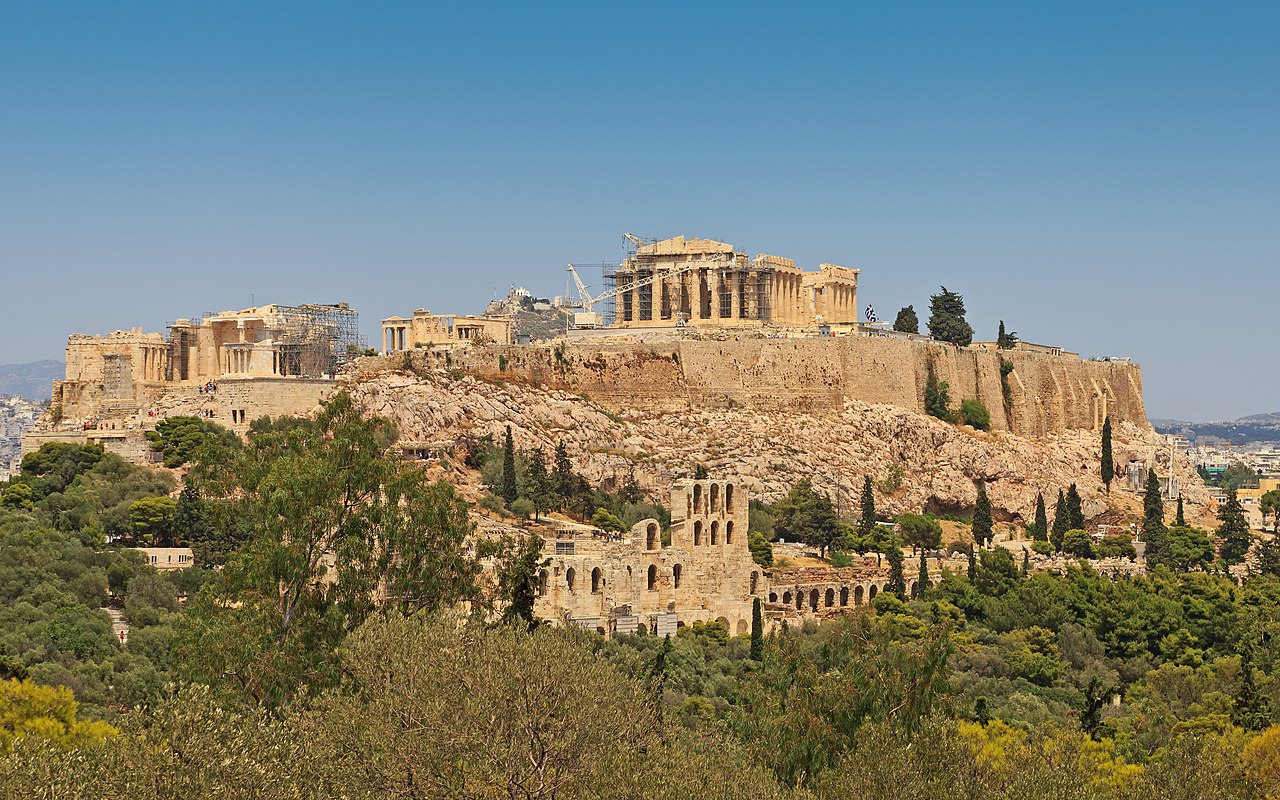
Athens was an intellectual powerhouse, home to foundational philosophers such as Socrates, Plato, and Aristotle, whose ideas laid the groundwork for Western thought across ethics, politics, and metaphysics. Beyond intellectual pursuits, Athenian society showcased its cultural prowess through breathtaking architectural marvels like the Parthenon, a testament to its artistic achievements that established enduring standards for classical art. During the 5th century BC, Athens' naval supremacy saw it transform the Delian League into a powerful Athenian Empire, extending its influence across much of the Aegean. For a deeper dive into its iconic rivalry, explore Athens vs. Sparta: Unpacking Ancient Greece's Iconic Rivals.
Sparta: The Quintessential Military Polis
In stark contrast to Athens, Sparta, located in Laconia within the southeastern Peloponnesus, forged an identity defined by unparalleled military prowess and an unyielding social structure. Spartan life revolved entirely around discipline, strength, and unwavering loyalty to the polis. From the age of seven, male citizens entered the agoge, a rigorous state-sponsored education and training system designed to produce elite, formidable soldiers.
Sparta's unique mixed government was an oligarchy, featuring two hereditary kings, a council of elders (the Gerousia), and elected officials known as ephors. This system maintained stability and upheld traditional Spartan values. The economic engine of Sparta relied heavily on the subjugated population of helots, who were forced to farm and provide sustenance for the Spartan elite, allowing male citizens to dedicate their lives to military training. Interestingly, Spartan women enjoyed comparatively more freedoms and responsibilities than their counterparts in other Greek city-states, including property rights and physical training, reflecting the polis's pragmatic focus on producing strong citizens. Discover more about the clashes between these two giants in Athens vs. Sparta: Unpacking Ancient Greece's Iconic Rivals.
Corinth: The Strategic Crossroads of Trade and Innovation
Corinth, another prominent Ancient Greek City, commanded a highly strategic location on the narrow Isthmus of Corinth, connecting mainland Greece to the Peloponnesus. This geographical advantage made it an indispensable hub for trade and commerce, transforming it into one of the wealthiest city-states in ancient Greece.
Controlling vital trade routes between the Aegean and Adriatic Seas, Corinthian merchants amassed considerable fortunes, fueling monumental architectural projects. The city is famously credited with developing the Corinthian column, a highly ornate architectural order that profoundly influenced classical and modern design. Beyond its economic might, Corinth also held significant religious importance, housing prominent temples, including the renowned Temple of Aphrodite. Corinth's legacy is a testament to its economic ingenuity, architectural innovations, and cultural vibrancy, making it a central power and a crucial player in the broader network of From Trade to Philosophy: Key Powers of Ancient Greek Poleis.
The Enduring Legacy of the Polis
The polis, in its various manifestations, was the cornerstone of ancient Greek civilization. It was the arena for political innovation, intellectual discourse, artistic expression, and military might. The distinct identities forged within each Ancient Greek City—from democratic Athens to militaristic Sparta and mercantile Corinth—contributed to a rich tapestry of human experience and achievement.
The concepts developed within these city-states, particularly those pertaining to citizenship, governance, philosophy, and civic duty, have had an unparalleled impact on Western civilization. Our modern notions of democracy, justice, and the role of the individual within society owe a profound debt to the experiments and ideas that flourished within the ancient Greek polis. These vibrant, self-contained worlds, each with its unique character, continue to captivate and educate us about the very foundations of our political and cultural heritage.