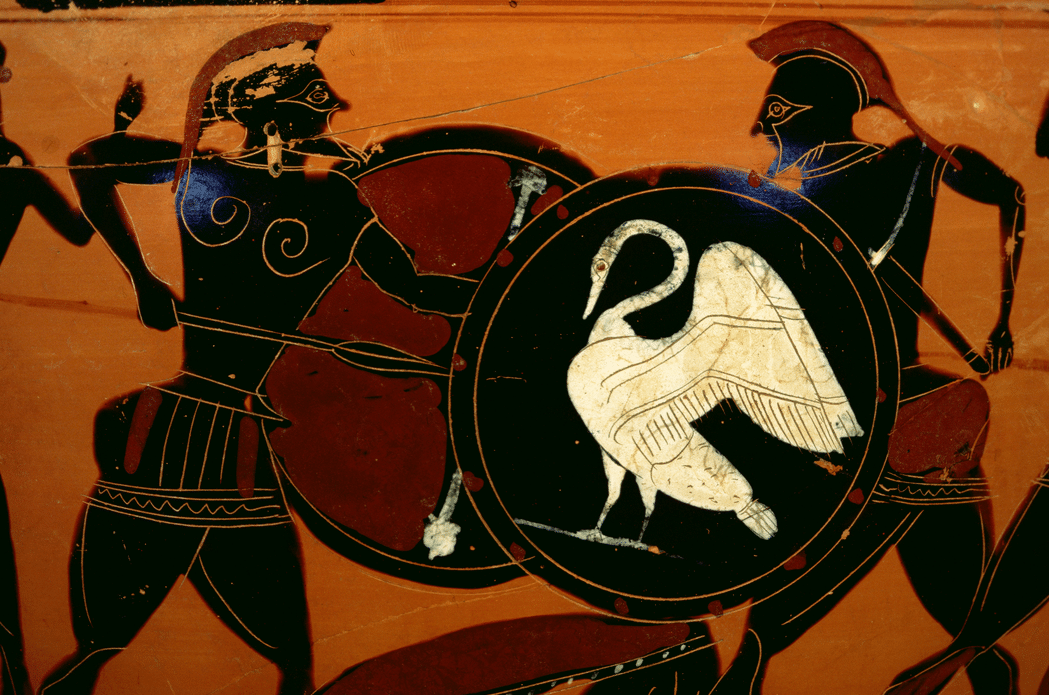
The Fierce Rivalry: Unpacking Athens vs. Sparta, Ancient Greece's Iconic City-States
Ancient Greece, a cradle of Western civilization, was not a unified nation but a vibrant tapestry of independent city-states, each a self-governing entity known as a polis. These poleis, more than just physical cities, were the fundamental units of identity, governance, and culture for the Hellenic people. Among the hundreds of these unique political and social experiments, two stand out as eternal symbols of contrasting ideologies and power: Athens and Sparta. Their rivalry, born from fundamentally different societal structures and values, shaped the course of ancient history and continues to fascinate scholars and enthusiasts alike.
The Polis: More Than Just an Ancient Greek City
To truly understand the dynamic between Athens and Sparta, one must first grasp the profound significance of the polis. In ancient Greek, a "polis" transcended the modern understanding of a "city." It was a sovereign entity, comprising an urban core and its surrounding agricultural lands, demanding the supreme loyalty of its citizens. Unlike a modern city within a larger country, the polis was the native land, the ultimate source of identity and belonging. Its citizens were bound by shared laws, customs, and often, a common deity or heroic ancestor.
This decentralized structure led to an incredible diversity across the Hellenic world. While all shared a common language (or dialects thereof) and religious pantheon, each Ancient Greek City-State developed its own distinct governmental system, social norms, and cultural priorities. From the bustling mercantile power of Corinth, strategically positioned on its narrow isthmus connecting crucial trade routes, to the martial discipline of Sparta, and the intellectual fervor of Athens, the variety was astounding. This rich tapestry of independent states, stretching far beyond the modern borders of Greece and numbering around 1,500 by some estimates, created an environment ripe for innovation, competition, and, at times, fierce conflict.
Athens: Cradle of Democracy and Cultural Flourishing
Located in the region of Attica, Athens stands as perhaps the most celebrated Ancient Greek City. Renowned for its groundbreaking contributions to governance, philosophy, and the arts, Athens laid foundational stones for many aspects of Western thought and society. Its story is one of innovation and intellectual pursuit.
- The Birthplace of Democracy: Athens is famously recognized as the birthplace of democracy. Under visionary leaders such as Cleisthenes, who introduced reforms in the late 6th century BC, and the Golden Age statesman Pericles, Athenian citizens were granted unprecedented rights to participate directly in their governance through assemblies and juries. While 'citizenship' was limited to freeborn adult males, excluding women, slaves, and foreign residents (metoikoi), this revolutionary system of self-rule was a profound departure from the monarchies and oligarchies prevalent elsewhere.
- A Hub of Philosophy and Education: The intellectual climate of Athens was unmatched. It was home to seminal thinkers like Socrates, whose method of questioning laid the groundwork for critical thought; his student Plato, who founded the Academy and explored ideal societies; and Plato's student Aristotle, who systematized logic, ethics, and biology. These philosophers, alongside playwrights like Sophocles and Euripides, and historians like Thucydides, established the enduring foundations of Western philosophy, literature, and scientific inquiry. Education in Athens aimed at producing well-rounded citizens, skilled in rhetoric, philosophy, and the arts, alongside physical training.
- Artistic and Architectural Grandeur: The cultural prowess of Athens found its most visible expression in its magnificent art and architecture. The construction of the Parthenon on the Acropolis, a temple dedicated to the goddess Athena, epitomized classical Greek architectural principles with its meticulous proportions and intricate sculptural decoration. Athenian potters, sculptors, and dramatists set aesthetic standards that continue to inspire designers and artists millennia later.
- Naval Dominance and Empire Building: Beyond its cultural achievements, Athens was a formidable naval power. Following the Persian Wars, it transformed the Delian League, an alliance initially formed to protect Greek city-states from Persia, into a de facto Athenian Empire. By the 5th century BC, Athens controlled much of the Aegean Sea, leveraging its maritime strength for both defense and economic prosperity, further fueling its cultural and political ambitions.
Sparta: The Unyielding Military Machine
In stark contrast to Athens, the Ancient Greek City of Sparta, nestled in the rugged region of Laconia in the southeastern Peloponnesus, forged a society entirely centered on military strength, discipline, and unwavering loyalty to the state. Sparta's legacy is one of unparalleled martial prowess and a unique, austere way of life.
- A Society Forged for Warfare: Spartan life revolved around the pursuit of military excellence. Male citizens, known as Homoioi (Equals), underwent the rigorous agoge, a state-sponsored education and training system that began at the age of seven. This system stripped boys from their families, subjected them to harsh physical training, strict discipline, and communal living, designed to produce the most formidable soldiers in the ancient world. Individual comfort and expression were sacrificed for collective strength and readiness for battle.
- Unique Governmental Structure: Sparta was governed by a complex and stable oligarchy. It featured two hereditary kings, who served primarily as military leaders and religious figures, alongside a council of elders (the Gerousia), composed of 28 men over 60 years old and the two kings, who proposed laws. Real executive power often lay with the five elected officials known as ephors, who oversaw the kings, the agoge, and the general conduct of citizens. This mixed constitution aimed to balance power and prevent tyranny.
- The Helot Underclass: The Spartan economy was uniquely dependent on a subjugated population called the helots. These enslaved people, primarily from conquered territories like Messenia, vastly outnumbered Spartan citizens and were forced to farm the land, providing sustenance for the Spartan elite. The constant fear of helot revolt profoundly shaped Spartan society, necessitating their perpetual state of military readiness and contributing to their secretive, insular nature.
- Remarkable Freedoms for Women: Surprisingly, Spartan women enjoyed significantly more freedoms and responsibilities compared to their counterparts in most other Greek city-states. While not politically active, they could own and inherit property, manage estates (especially when men were away at war), and received physical training to ensure they produced strong, healthy Spartan sons. Their purpose was primarily to support the state through childbearing and estate management, but their relative empowerment within this framework was notable.
A Clash of Ideologies: Comparing Athens and Sparta
The rivalry between Athens and Sparta was not merely a contest for dominance; it was a fundamental clash of ideologies that profoundly influenced the Hellenic world. Their divergent paths represented two distinct visions for the ideal Ancient Greek City, culminating in the devastating Peloponnesian War.
- Governance and Society: Athens championed democracy, intellectual freedom, and artistic expression, fostering a society that valued rhetoric, debate, and individual achievement (within the bounds of citizenship). Sparta, conversely, embodied a rigid oligarchy, absolute discipline, and collective military might, prioritizing the state above the individual and cultivating a culture of strict obedience and physical prowess.
- Economy and Power: Athens, with its strategic port of Piraeus, thrived on trade, maritime power, and a vast network of allied states. Its wealth flowed from commercial ventures and tribute from its empire, allowing for grand public works and intellectual pursuits. Sparta's economy, however, was agrarian and depended almost entirely on the coerced labor of the helots. Its power stemmed from its invincible hoplite army, maintained through its unique social system, rather than naval or commercial strength. For more on the economic and philosophical underpinnings of these states, see From Trade to Philosophy: Key Powers of Ancient Greek Poleis.
- Education and Values: Athenian education aimed for holistic development, producing citizens adept in philosophy, rhetoric, arts, and physical training. Spartan education, the agoge, was a singular, ruthless system designed exclusively to forge elite soldiers, instilling values of courage, endurance, and absolute loyalty to the state.
- Women's Roles: While women in both societies lacked political rights, their daily lives and societal expectations differed markedly. Athenian women were largely confined to the domestic sphere, with limited public roles. Spartan women, by contrast, enjoyed greater autonomy, property rights, and physical training, all within the context of their crucial role in bearing and raising future warriors for the state.
Ultimately, neither system was perfect, and both faced internal challenges and external threats. Athens experienced periods of demagoguery and imperial overreach, while Sparta constantly grappled with the threat of helot rebellion and its own demographic limitations. Yet, their unique contributions and contrasting legacies offer invaluable insights into the multifaceted nature of ancient Greek civilization.
Enduring Legacies
The rivalry between Athens and Sparta, two monumental Ancient Greek City-states, transcends the annals of ancient history. Athens bestowed upon the world the foundational concepts of democracy, Western philosophy, and classical art, shaping political thought and cultural aesthetics for millennia. Sparta, through its unwavering discipline and military innovation, left an indelible mark on military strategy and exemplified the concept of a society fully dedicated to a singular ideal. Their distinct approaches to governance, society, and human potential continue to inspire debate and study, reminding us of the rich diversity and enduring impact of the ancient Greek world.